12 Steps to Launching Your First Blog: A Guide for Beginners
In this step-by-step guide we walk you through the basics of launching your first blog successfully. Follow these steps, and if necessary, adjust your starting point, as you go through the process.
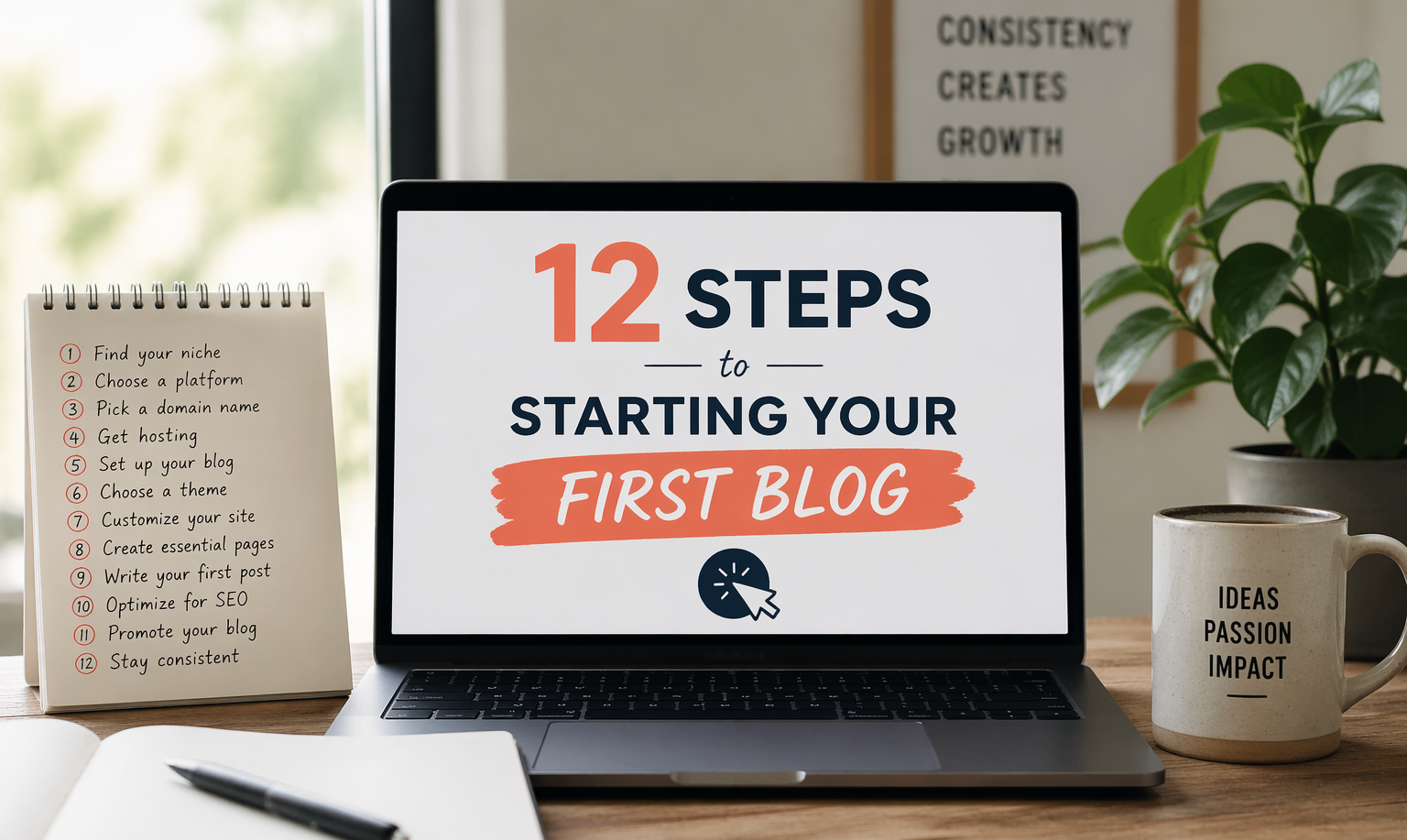
1. Choose a Niche: Select a specific niche or subject area that you are passionate about or have some amount of expertise.
2. Research Audience: Research your target audience. Understand their needs, interests and pain points.
3. Select a Blogging Platform: Choose a blogging platform to create and publish your blog. This is the software used to create a blog and publish content. Examples include WordPress, Squarespace, Wix, and others.
4. Register Domain Name: Choose a unique, memorable, and marketable domain name for your blog. Get it registered with one of the registrars, such as GoDaddy, NameCheap, and your hosting provider, who may offer a one-stop shop for domain, hosting, email, and so on.
5. Choose Web Hosting: Select a reliable web hosting provider for your blog. Of these, there are many. In the case of Bloganeurs, we currently use Hostinger. Consider factors such as speed, uptime, customer support, and availability of SSL (Secure Sockets Layer, which encrypts data sent over the Internet). Look carefully at what other web hosting providers offer for free compared to others, and most importantly – the actual costs.
6. Installing WordPress or other Content Management System (CMS): Nowadays AI can be used to quickly create a blog or website. However, if you prefer to build your blog from scratch using WordPress, for example, this can usually be done through the hosting provider you sign up with.
7. Customize Your Blog: Choose an appropriate theme for your blog. Customize the design, layout and features to reflect your brand style. There are many free themes that can be used to complete a full blog, but you could also purchase one if preferred.
8. Create Essential Pages: Create the essential pages such as About Me, Contact, and Privacy Policy to provide information to readers and comply with legal requirements.
9. Develop Content Strategy: Plan your content strategy, which should include relevant topics, posting frequency, and how you are going to format your blog articles, videos, infographics, etc.
10. Start Creating Content: Create and publish content for the blog. Focus on providing value to your target audience, while helping to solve their problems.
11. Promote Your Blog: Utilize social media, email marketing, search engine optimization (SEO), and other promotional tactics, to drive traffic to your blog.
12. Monitor and Analyze: Monitor your blog’s performance using tools such as Google Analytics, or your own methods. Gather feedback from your audience. Use the information gathered to refine your strategy and improve your blog over time.