
The Beginner’s Guide to Digital Business Ideas
Building a digital business is not as difficult as we may believe. However, this requires picking a model that fits your skills, time, resources, and then sticking with it long enough to see positive results.
Let’s have a more fundamental look at some of the digital business ideas worth considering as a beginner, along with what each one actually demands.
- Content-Based Businesses
A content-based business includes blogs, YouTube channels, newsletters, podcasts, and so on. These businesses are built around a specific topic/niche, with income coming from ads, sponsorships, affiliate links, or the sale of your own products.
Building a content-based business requires consistent content creation, more than a little patience (growth is usually slow for the first 6-12 months), and a willingness to learn more about building an audience through social distribution or search engine optimization (SEO).
Is this for you?
The content-based model is suitable for those who enjoy writing, talking, or teaching, and of course, those who can commit to regular publishing over an extended period.
2. Freelancing and Service-Based Model
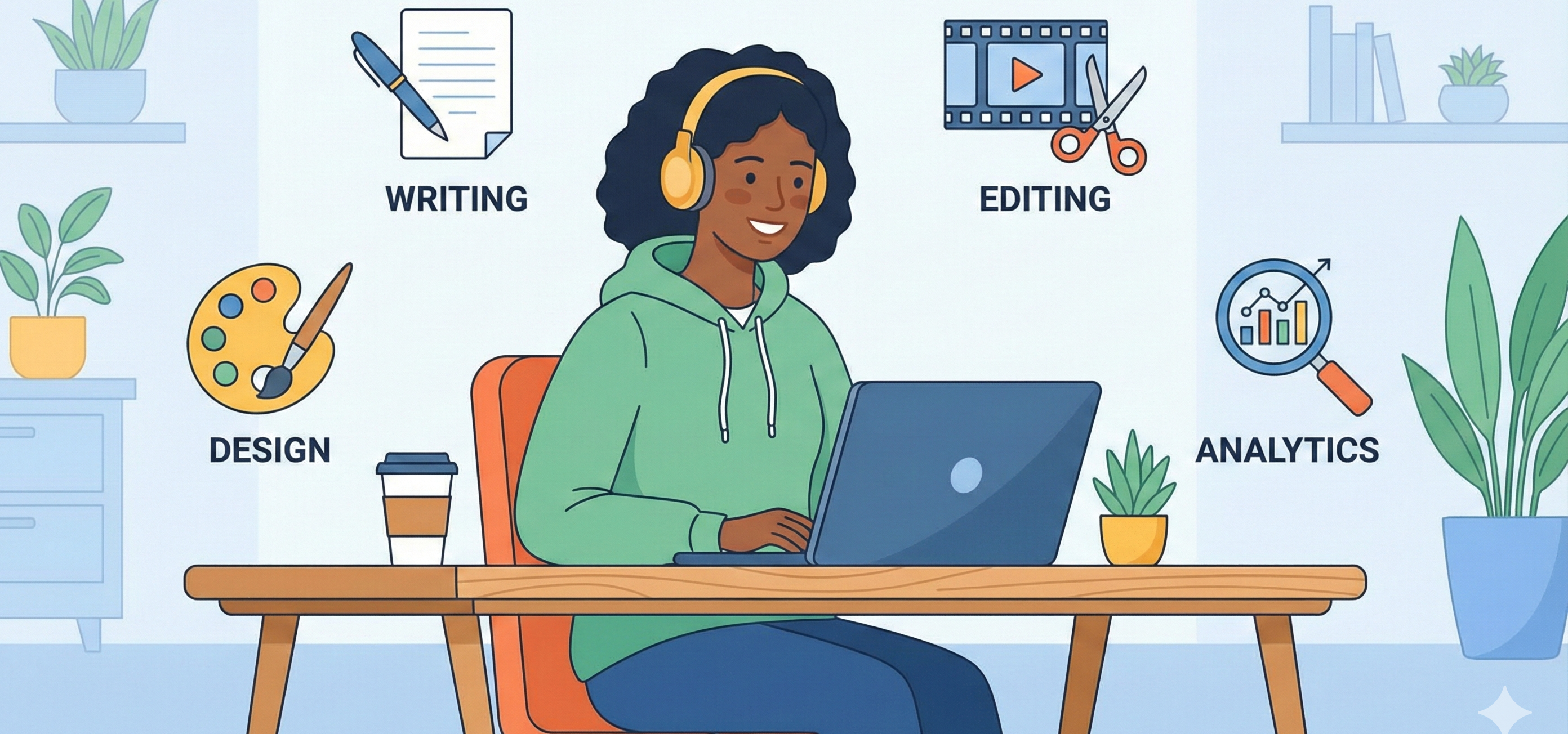
The freelancing and service-based business model involves offering a specific skill such as writing, design, video editing, web development, virtual assistance, and so on, directly to clients. Usually this is done through a platform (e.g., Fiverr) or through your own outreach.
For this, you will need to have an existing or learnable skill, the ability to find and retain clients, and a certain level of tolerance for irregular income during the early stages.
Is this for you?
Freelancing and service-based businesses are suitable for individuals seeking the fastest path to revenue; who are comfortable trading time for money, while working toward more scalable models.
3. Digital Products
As you may already know, digital products include a wide range of items, including for example, eBooks, templates, printables, online courses, and selling them repeatedly without ongoing production costs.
For digital products creation you need to have genuine expertise in a particular topic, basic design or writing skills, and a way to reach your potential buyers (an audience, marketplace, website, through paid ads, etc.).
Is this for you?
The digital products business is suitable for those who want to create a scalable, low-overhead product, whether you are a beginner or possess knowledge in a particular niche.
4. Ecommerce & Dropshipping
What this involves is selling physical or print-on-demand (POD) products online, either by holding inventory, or using a fulfillment partner who ships on your behalf.
For this model, you need to have a reasonable level of comfort with marketing, paid advertising (if necessary), attention to margins, logistics, and in some cases, the ability to test products before committing heavily.
Is this for you?
Well, this model is suitable for you if you enjoy merchandising, branding, and the operational side of running a store.
5. Software and Micro-SaaS Tools
If you have the skills, you could build software that solves one specific problem for a defined audience, monetized as a subscription or one-time fee.
For this idea, you need to have technical skills (or you could hire these skills). You also need to have a clearly identified problem, and the patience to refine the product, based on user feedback.
Is this for you?
If you have software development experience, or you are a non-technical founder willing to partner closely with a developer, then this business idea is suitable for you.
6. Online Communities and Memberships
For this business model, you charge for access to a community, coaching, or recurring premium content around a shared interest or professional need.
Is this for you?
An online community or membership model is best for those who already have an engaged audience or niche expertise, plus the ability to keep the community active and valuable.
Choosing the Right Model
Overall, there are many options, but the final decision regarding which business idea you choose, usually comes down to three essential questions:
- What skill or knowledge do you already have, or willing to learn? With the various tools available nowadays, you can learn a lot within a relatively short period of time.
- How long can you wait before you need income? While freelancing will pay you faster; content and products tend to take longer.
- How much capital can you risk? The ecommerce and paid-ad-driven models may require more upfront spend, compared to content or service-based businesses.
Action
Many successful beginners begin with one narrow, specific version of a model. For example, they may start with a freelance service, a basic digital product, or maybe a single niche blog, and then refine it based on actual feedback before expanding.
What you need to do now is to choose one idea, learn its workings thoroughly, and stick with it, especially during the slow months when most people quit. Your consistency, more than anything else, is what will lead to you creating a really successful digital business.